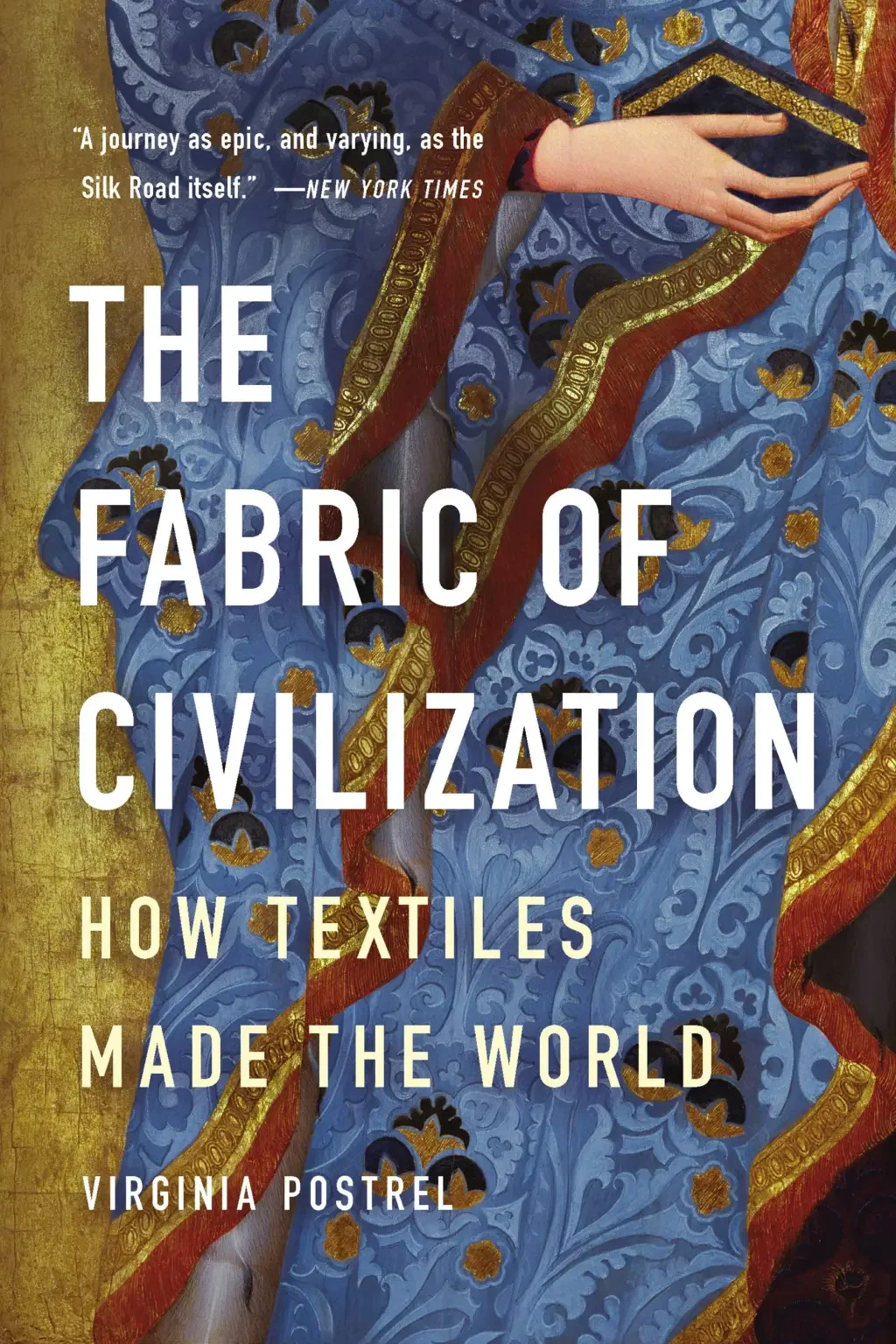
The Fabric of Civilization: How Textiles Made the World
Virginia Postrel
Basic Books, New York, 2020
The Fabric of Civilization examines textiles not simply as objects of dress or decoration, but as technologies that have shaped the development of human civilization. Drawing on archaeology, economics, science, and history, Virginia Postrel follows the evolution of fiber, thread, cloth, and dye alongside the systems of trade, technology, commerce, and knowledge that grew around them. (Hachette Book Group)
The book moves from the earliest manipulation of natural fibres through spinning and weaving to the global textile trade and modern synthetic materials. Along the way, it reveals how textile production contributed to agricultural development, systems of measurement and accounting, scientific innovation, trade networks, and the movement of ideas between cultures. (PCAD Library)
For Qamīs, Postrel offers an important framework for understanding the shirt not as an isolated garment, but as the visible result of a much larger material system. Fiber, thread, textile, dye, labor, technology, trade, and knowledge are interconnected stages in a history that extends far beyond the finished object.
The book reinforces one of Fragmenta’s central questions: what can the things we make reveal about the societies that made them?