Making as Knowledge
We often think of knowledge as something that is written, catalogued, or taught. Yet much of what shapes our world has never existed in books.
It exists in gestures repeated over generations. In materials understood through touch rather than instruction. In workshops, factories, kitchens, quarries, and fields, where knowing is inseparable from making.
Every object carries this accumulated knowledge. Before it reaches us as a finished form, it has already passed through countless decisions: which fibre to cultivate, how tightly to twist a thread, how to tension a loom, where to place a seam, when to polish a surface, when to stop.
These decisions are rarely documented. They are transmitted through observation, repetition, correction, and experience. They belong as much to the body as to the mind.
The Eastern Mediterranean has long been shaped by these forms of knowledge. Its textiles, stonework, metalwork, ceramics, glass, and wood traditions emerged not only from available materials, but from relationships between landscapes, industries, trade, labour, and communities. Every technique reflects generations of adaptation to climate, geography, and cultural exchange.
To study making is therefore not simply to study objects. It is to study systems.
A garment is not only fabric. It is agriculture, spinning, weaving, dyeing, cutting, sewing, transport, trade, maintenance, and repair.
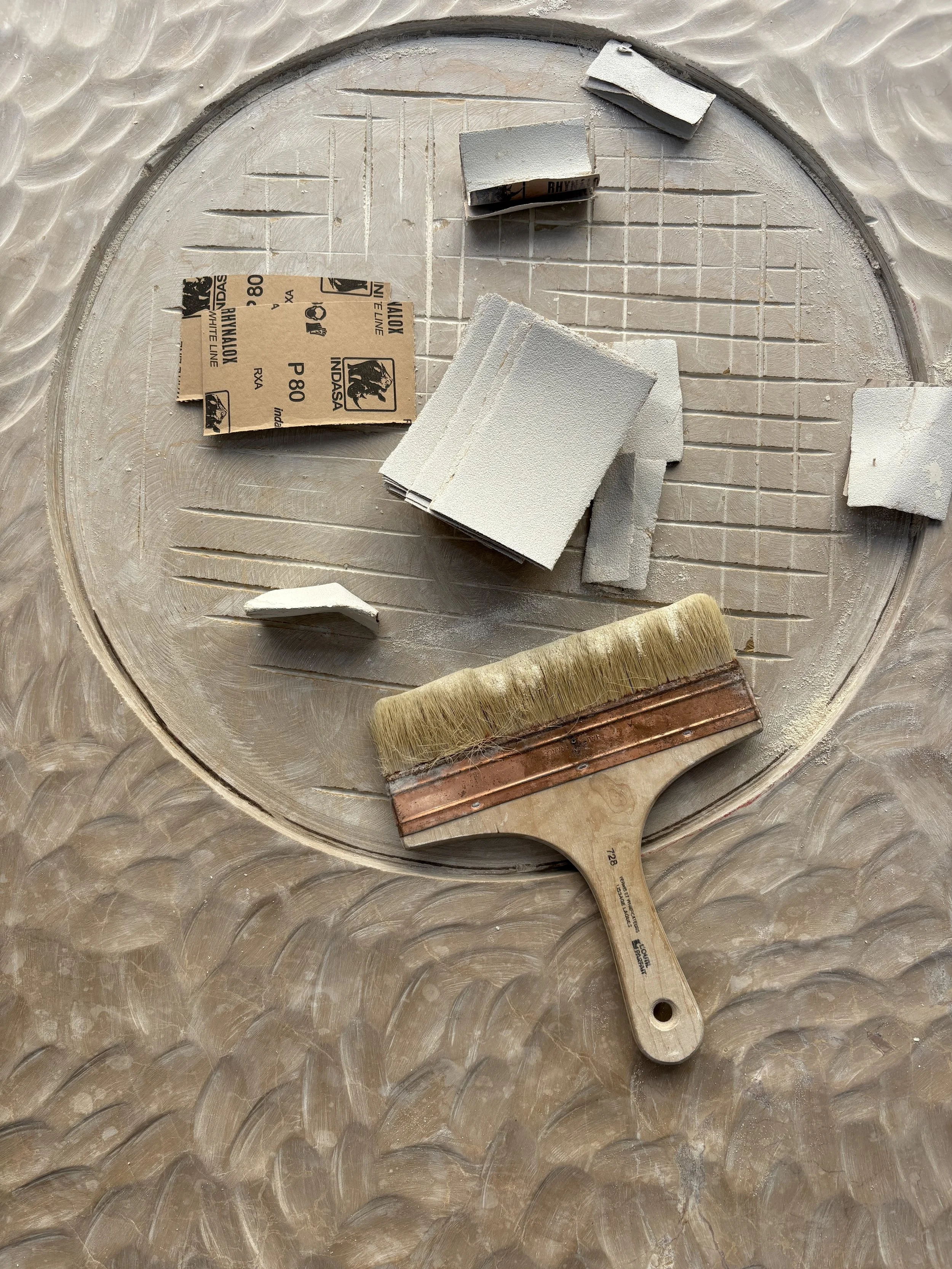
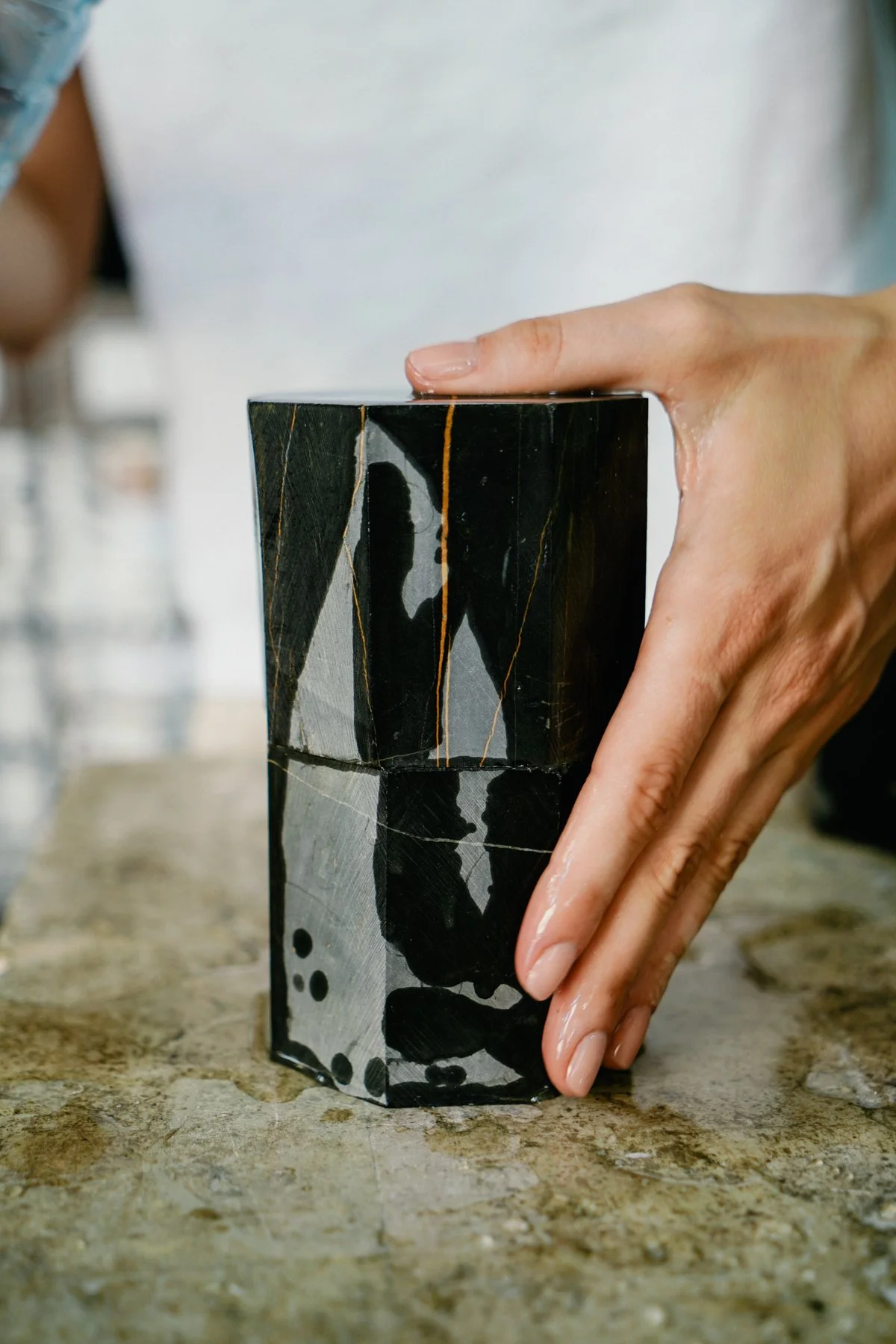
A stone table is not only marble. It is geology, extraction, craftsmanship, engineering, finishing, and the industrial infrastructures that allow material to move from quarry to workshop.
Making reveals networks that finished objects often conceal.
This understanding shapes Fragmenta.
Each edition begins not with a product or a collection, but with a fragment: a material, an object, or a process capable of revealing broader relationships. Research follows these connections through conversations, field visits, archives, industries, and communities before they return to the exhibition as design.
The exhibition is therefore not the conclusion of research, but one expression of it.
As industries disappear and specialised crafts become increasingly fragile, documenting knowledge becomes as important as preserving objects. What is at risk is not only material heritage, but the skills, gestures, and ways of thinking embedded within practices of making.
Knowledge survives when it continues to be practised, shared, questioned, and transformed.
Making is one of the ways cultures remember.
This essay accompanies Fragmenta’s ongoing research methodology and informs both the inaugural edition, Stone, and the second edition, Qamīs: Fragments of Dress.